BY REBEKAH MANN
Staff Writer
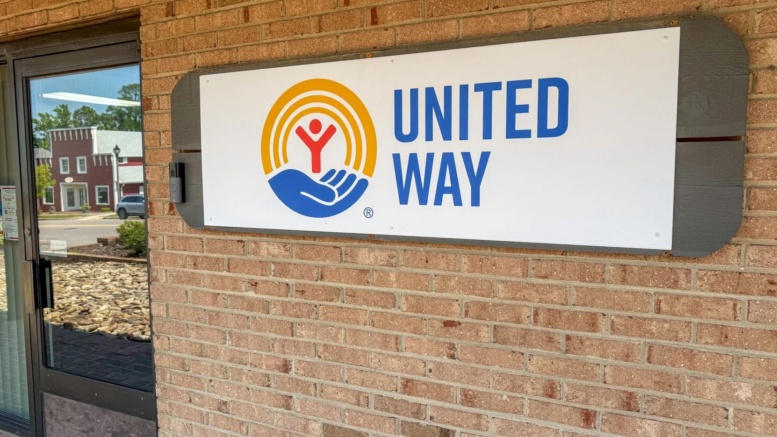
Starting Nov. 9, United Way of Moore County announced it is accepting letters of intent from local nonprofits interested in applying for the 2027 Community Investment Grants.
This grant cycle comes a few months after the organization revealed a mission change in August. President Linda Pearson said in an email to The Pilot that the new mission — “empowering families to thrive by building pathways to lasting stability” — brings a more focused direction to the organization’s funding priorities and how the impact of investments are evaluated.
The new mission replaces language that has guided the organization since 1968 and was adopted in an era when local United Ways operated more like general community chests, funding a wide range of causes across many sectors. According to its website, the local affiliate currently funds 16 partner agencies across three focus areas of education, financial stability and health.
“With any significant change comes some uncertainty, and we recognize that our nonprofit partners may have questions about what this new direction means for them,” Pearson wrote. “We have made a deliberate effort to keep our current partners informed and involved throughout this transition. While questions about alignment and the future are understandable, we’ve tried to address those concerns along the way.”
Pearson said the organization believes that a change in demographics across the Moore County community, a loss of manufacturing over the years and a loss of workplace campaigns negatively impacted its ability to allocate funds in a wider way.
“We’ve had to take a look at our impact in the community, ultimately with the money we were able to raise over the years,” Pearson wrote. “We could no longer do what we had always done expecting greater results, so, we took seriously the need to revitalize our local United Way and become a significant agent for positive change for the community.”
Pearson added that with the new mission, the grant application will also look different this cycle to be more in line with quarterly reporting requirements. That includes an added focus on the specific program or project for which funding is requested, the intended contribution to family stability and the measurable outcomes applicants plan to report.
“We’re creating a document that will include a working guide for our nonprofit partners,” Pearson wrote. “We’re hoping to see requests that are clear, concise and specific. I think those applying will like the revisions we’ve made.”
Despite changes, Pearson stated that the organization will continue its community-based volunteer review process, which she said is important to donors and to the United Way.
“We will continue to equip our volunteers with comprehensive applicant information and additional training to support thoughtful, informed funding recommendations,” Pearson wrote. “While the foundation of our process remains the same, our approach will be more intentional, with a stronger focus on outcomes, accountability and lasting community impact.”
Partners for Children and Families is one of United Way’s previous grant recipients that falls under the education focus. Executive director Stuart Mills said he is supportive of United Way’s mission change, stating his understanding of the organization’s goal with the change is to be more successful at fundraising for the community.
“It’s a very thoughtful, intentional change,” Mills said. “They’re very sensitive to the changes, and how that will affect the community partners.”
United Way currently helps fund three programs for Partners for Families and Children: The Smart Start Family Success program, Positive Parenting program and Summer Reading Stations program. Mills said each program is not solely reliant on United Way’s support, but it is helpful. He believes there is a direct path for the Smart Start Family Success Program to fit in with the new mission, but he’s not as certain about the other two.
According to the Partners for Children and Families website, the Smart Start Family Success program partners with families to build on their strengths, set meaningful goals and create lasting change through trusted relationships, evidence-based coaching and community support. Summer Reading Stations program provides brand new books, interactive activities, parent resource guides and nutritious snacks for children; and the Positive Parenting program connects parents with accredited practitioners to receive additional support and advice for things like discipline strategies.
“The types of programs that we apply for funding for might change a little bit — it just depends on the application,” Mills said. “They’re clearly trying to work with their existing partners to make sure they’re still supported.”
Another United Way partner under the education focus, Moore County 4-H Youth Development, establishes community clubs or special interest groups for children with a focus on life skills, education, citizenship, community service and leadership preparation. Extension Agent Kaley Lawing said she believes 4-H will do well underneath the new mission.
“Youth development is an investment in the future, and the skills, experiences and opportunities we provide help prepare young people for success in school, the workforce and life,” Lawing said. “By providing opportunities for youth to develop leadership skills, explore careers, build confidence and establish meaningful relationships with caring adults, we are helping prepare the next generation for long-term success.”
Listed under both the education and the financial stability focuses, The CARE Group Inc. has previously received United Way grants for its work to support adults with low literacy skills and its mentoring programs for at-risk children.
Executive Director Joyce Clevenger said because there are multiple different ways of measuring and addressing poverty, she believes The CARE Group remains in line with United Way’s new mission.
“There’s a poverty of education, and there’s a poverty of financial stability,” Clevenger said. “There’s a poverty of inadequate parenting skills and knowledge about how to raise a child, and these families are just repeating the cycle from what they know.”
She added that The CARE Group depends on United Way funding because it typically can be harder to secure grants for programming that supports juveniles with behavior issues rather than children who might experience different types of adversity.
“For United Way to make this an issue and raise awareness is hugely important to our area because we need people to know that we’re not just golf courses and country clubs,” Clevenger said. “There is need here, and as a community we need to address it.”
Falling into the health focus, Meals on Wheels of the Sandhills executive director Penny Jeffrey said the nonprofit plans to apply but the mission change might require them to take a different approach.
“Based on attending the summits, it felt like Meals on Wheels can still have a place there,” Jeffrey said. “We just have to be creative when writing the grant application.”
Before the mission changed, United Way gathered feedback from several Moore County nonprofits, agencies and service providers working to address financial stress and stability. United Way said participants identified housing and local wage stagnation as a primary driver of local financial instability, with childcare, transportation and fragmented services noted as persistent barriers.
“Our intention is not to exclude organizations doing meaningful work in Moore County, but to be inclusive of programs that advance our mission and contribute to family stability, and also keeping in mind that youth development remains an important part of the work we support,” Pearson recently wrote to The Pilot. “Ultimately, our funding decisions can only reflect the resources available and the greatest opportunities to make a measurable difference in our community.”
In order to be considered for funding, organizations interested in applying for United Way grants must be 501(c)(3) certified and submit a letter of intent on or before Dec. 14. Full application information will be available after letters of intent are received.
Nonprofits interested in sending United Way a letter of intent can mail them to P.O. Box 207, Southern Pines, NC 28388, or drop off at 227 W. Pennsylvania Avenue.
Contact Rebekah Mann at (910) 693-2479 or rebekah@thepilot.com.