BY REBEKAH MANN
Staff Writer
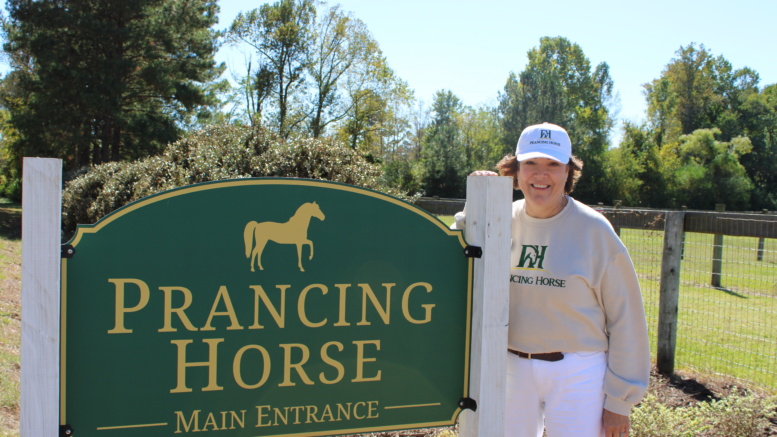
Secluded in the northern woodlands of Hoffman Road just a few miles from U.S. 1, a serene 30-acre horse farm has been enriching the lives of Moore County residents for 43 years.
Founded in 1984, Prancing Horse Center for Therapeutic Horsemanship is a nonprofit dedicated to improving the physical and emotional well-being of special needs individuals, children, veterans and seniors.
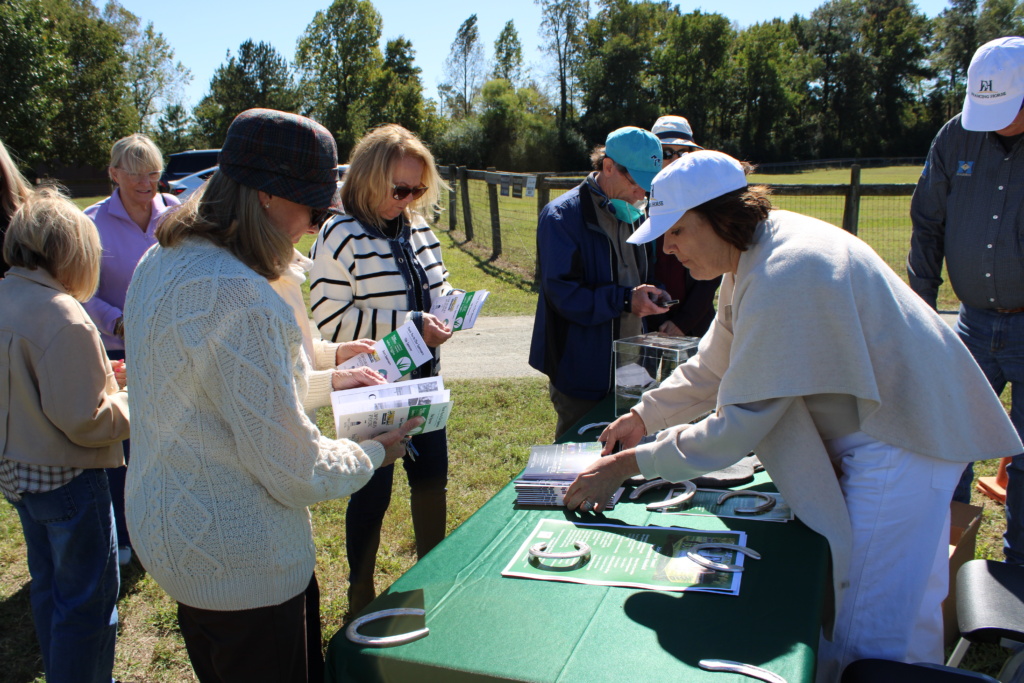
For more than three decades, Prancing Horse has organized an annual farm tour fundraiser allowing community members to get a behind-the-scenes look at local area farms. This year,
Prancing Horse opened its own doors alongside Sandywoods Farm, Hassinger Farm and the Will Faudree Eventing Centre.
On Sunday, approximately 350 guests visited the four farms, with proceeds benefiting Prancing Horse’s therapeutic initiatives. Prancing Horse is accredited by the Professional Association of Therapeutic Horsemanship international organization, which helps ensure safety and quality of service for horses, participants, volunteers and staff. The farm typically maintains between nine and 14 horses that support its programs, and all instructors are certified.
Among its initiatives are the farm’s therapeutic horsemanship program, which caters to all individuals above the age of 4 with special needs diagnoses. Instructors work to make accommodations for all participants, but for those whose diagnosis might prevent riding opportunities, alternatives like grooming, leading, tacking and other educational activities are available.
REBEKAH MANN / The Pilot
In partnership with the Wounded Warrior Project, the farm’s Freedom Reins program provides veterans an alternative to traditional clinical therapies. Hour-long sessions work to address some of the stress resulting from service in the line of duty.
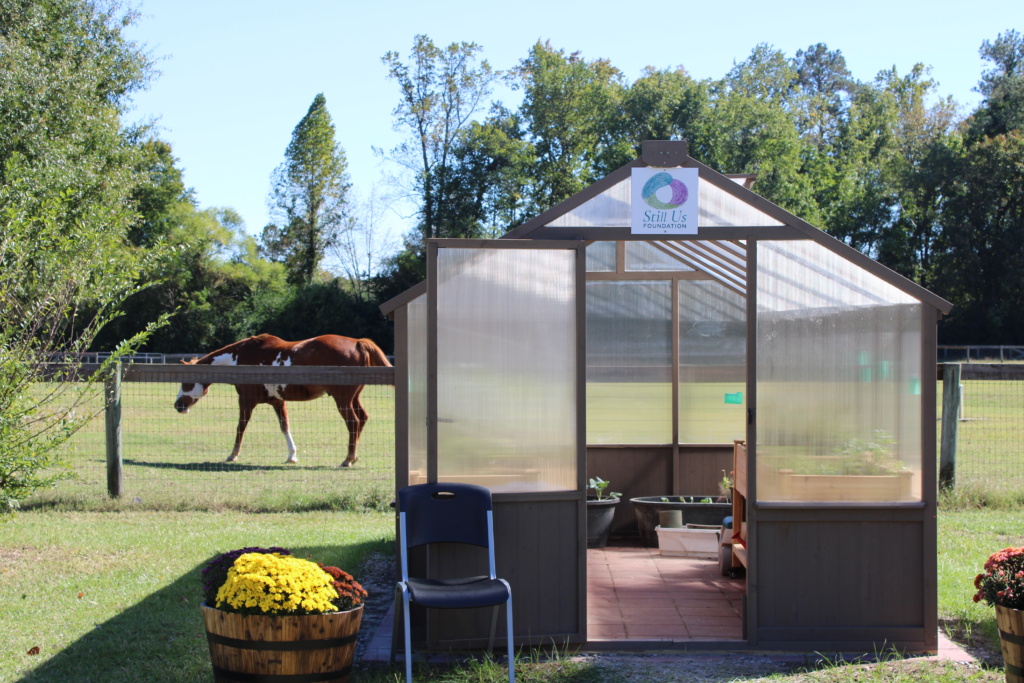
The farm also recently launched a pilot program in partnership with the Still Us Foundation, which included an addition of a greenhouse on the property. As part of the partnership, Alzheimer’s and dementia patients visit the farm once a week to garden and spend time with the horses.
Cindy Strohm, president of the board, said the programs together typically reach anywhere from 100-200 participants each year.
“Our intention is really to serve all our community in the different ways that horses can help and have a positive influence,” she said.
For each of the programs, instructors go through a rigorous process of designing lesson plans that are tailored to the needs of the students. Lessons focus on different activities to strengthen a student’s cognitive skills and their relationship with the horse, which can look like learning how to ride in a zigzag path, playing games in the arena or exercises with color and letter correspondence.
Strohm said a few of the benefits she has observed in participants include increased confidence, improved physicality like core strength and balance, and more.
“It’s just incredible to watch. One of the terms that we use is ‘walk on,’ so hearing a child that has difficulty verbalizing (words) say ‘walk on’ is very powerful,” Strohm said. “Little things like that just really make such a difference not only in their life, but also in the volunteers that participate with them.”
Tony Carlton, a military veteran, began volunteering with the farm in August. After retiring in 2014, he and his wife eventually purchased a retired rodeo horse named Carol. Having both lived high-impact lifestyles before their companionship, Carlton said his experience working with Carol helped him through the hardship of retiring and encouraged him to look inward.
“My transition was very rough, and I had no help,” Carlton said. “I thought I would have trained this horse, but she ended up training me.”
Many of the ways Carol helped Carlton look inward were centered around a horse’s ability to read and respond to body language and emotions, which the programs at Prancing Horse also emphasize.
“She knew if I was having a bad day, and when we did things, she would let me know if I did too much or too little,” he said. “Instead of trying to change the horse, I ended up changing myself.”
As a volunteer, Carlton now applies lessons he learned with Carol to aid veterans like himself at Prancing Horse. He explained that in order for the Freedom Reins program to be successful, trainers and volunteers meet veterans where they’re at. As a result, participants generally experience reduced anxiety both while working with the horses and in everyday life.
“It’s a great program,” Carlton said, adding that he also is contributing advice to the farm on ways to improve Freedom Reins to maximize its positive impact.
“I don’t want someone to have to go through the things that I had to go through,” Carlton said. “If someone’s there to give someone a helping hand, I think we all should aspire to that.”
For more information on Prancing Horse’s programs and volunteer opportunities, visit www.prancing-horse.org.
Contact Rebekah Mann at (910) 693-2479 or rebekah@thepilot.com